Beginner Workout Routine: How to Build One You'll Keep
A beginner's guide to how many days to train, how to split them, how to progress, and how to build a routine around your real schedule instead of an ideal one.
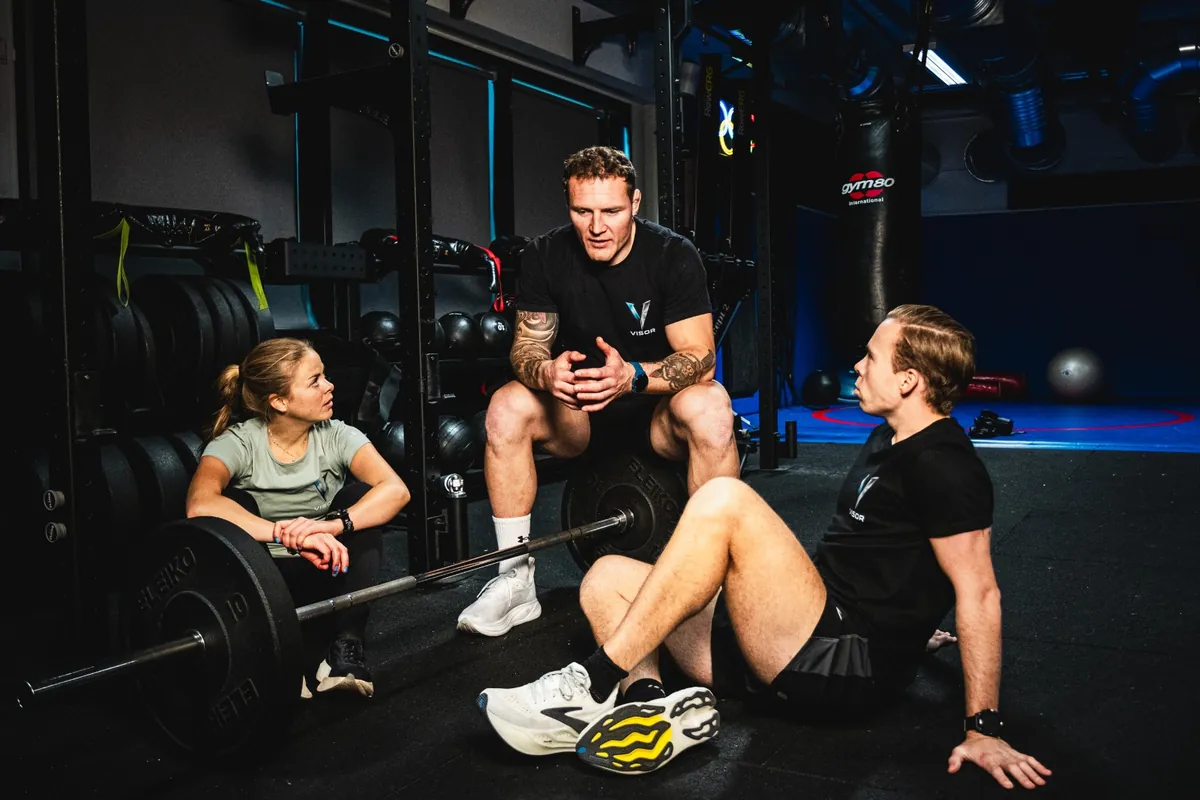
The best training programme is not the most sophisticated one. It is the one that fits the number of days you can genuinely train, in the time you genuinely have, at an intensity you can repeat next week. Everything else is optimisation on top of that.
If you have never trained before, start here
A beginner does not need different principles from everyone else — they need fewer decisions. If this is your first month in the gym, ignore the detail further down for four weeks and run this:
- Three sessions a week, on non-consecutive days.
- Each session: one squat or lunge, one hinge, one push, one pull, one core exercise.
- Two sets of 8-12 reps on each, stopping while you still have three or four reps left in you.
- Each week, add one rep or a small amount of weight. Change nothing else.
- After four weeks, come back and read the rest of this guide.
If you want that written out with named exercises, a four-week progression and a home option, our beginner workout plan for women lays it out session by session — the structure works the same whoever is running it.
Choose your days before your split
Decide honestly how many sessions per week survive a busy month — not a good month. Then pick the split that matches.
- Two days: two full-body sessions.
- Three days: full body, or push / pull / legs.
- Four days: upper / lower, twice.
- Five or more days: push / pull / legs plus accessory or conditioning days.
Cover the movement patterns
Rather than collecting exercises, cover six patterns each week: squat, hinge, horizontal push, horizontal pull, vertical push, vertical pull — plus direct core work. A routine that covers all six is already better balanced than most gym-floor programmes.
Volume and intensity that hold up
- Roughly 10-20 hard sets per muscle group per week suits most people.
- Take most working sets to within one to three reps of failure.
- Rep ranges of 5-12 build strength and size; the exact number matters less than the effort.
- Rest two to three minutes on heavy compounds — cutting rest just cuts performance.
Progression is the whole point
A routine without progression is just exercise. Each week, aim to add a small amount: one more rep, a little more load, or one cleaner set. When progress stalls on a lift for two to three sessions, reduce the load by around ten percent and build back up.
Change the programme when it stops progressing, not when it stops feeling novel.
Recovery is part of the routine
- Sleep is the single largest recovery variable — protect it before adding sessions.
- Leave at least one full rest day most weeks.
- Deload roughly every six to ten weeks, or whenever performance drops across several lifts.
- Walking on rest days aids recovery rather than hindering it.
Where VISOR helps
VISOR's AI coach adapts your programme session by session based on what you logged, how the sets actually felt and how consistent your week has been — so a rough week reshapes the plan instead of breaking it. When VISOR Elite Coaches opens, verified human trainers will be available in-app for form work and hands-on programming.
Pair this with our meal prep guide and progress tracking guide for the full picture.
Ready to put this into practice?
Get VISOR