How to Get a 6-Pack: A Realistic Transformation Guide
What it actually takes to reveal visible abs — body fat, training, nutrition and timelines — plus why seeing your future physique makes the process far easier to stick to.
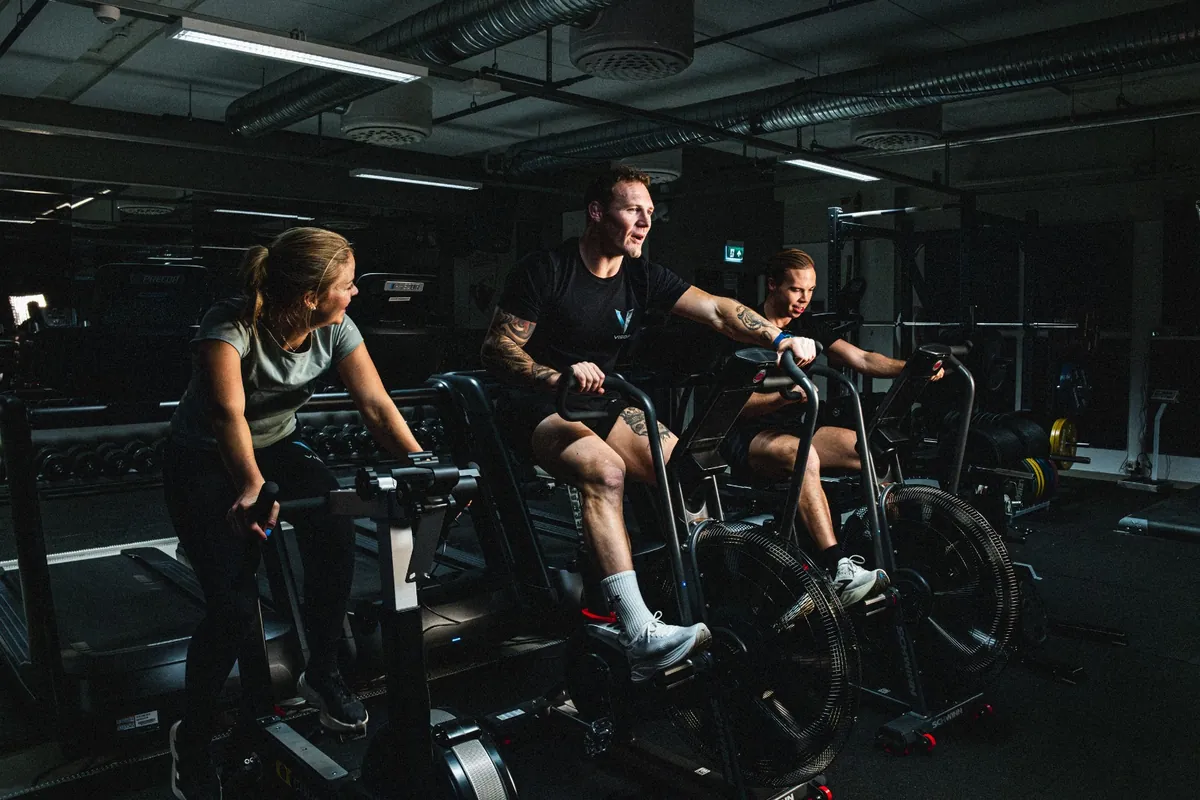
Almost everyone already has a six-pack. The rectus abdominis is there on every human body — it is simply covered by a layer of fat and, in many cases, underdeveloped. So the real question is not "how do I build abs?" but "how do I lower body fat far enough to see them, without wrecking the rest of my life doing it?"
The body-fat reality
Visible abs are mostly a body-composition outcome. For most men, faint definition appears somewhere around the mid-teens in body-fat percentage and a clear six-pack usually shows in the region of 10-12%. For most women the equivalent range sits roughly ten points higher, because essential fat stores are higher. These are ranges, not promises — genetics decide where you store fat and how your abdominal wall is shaped.
- Your starting body fat determines your timeline more than any workout plan.
- A sustainable loss of roughly 0.5-1% of bodyweight per week protects muscle.
- Someone starting at 25% body fat is realistically looking at months, not weeks.
- Spot reduction is not a thing — you cannot choose where fat leaves first.
Train the abs like any other muscle
Losing fat reveals the muscle; training gives it something worth revealing. Endless crunches are a poor use of time. Treat the core as a muscle group that responds to progressive overload and direct work two to three times per week.
- Weighted flexion work: cable crunches, decline sit-ups with a plate, machine crunches.
- Anti-extension work: hollow holds, ab wheel rollouts, dead bugs.
- Anti-rotation work: Pallof presses, suitcase carries.
- Heavy compound lifts — squats, deadlifts, presses — build the thickness that makes a lean midsection look muscular rather than merely thin.
Nutrition does the uncovering
A moderate calorie deficit, enough protein to hold onto muscle, and a diet you can repeat for months beats any aggressive cut you abandon in week three. Roughly 1.6-2.2 g of protein per kilogram of bodyweight is the range most research settles on for people training while losing fat.
- Set a deficit you barely notice rather than one you have to survive.
- Anchor every meal around a protein source.
- Keep resistance training in — a deficit without lifting costs you muscle.
- Sleep and step count move fat loss more than any supplement will.
Why most people quit before the abs arrive
The physiology is not the hard part. The hard part is that fat loss is slow, mirrors are unreliable, and progress between week four and week twelve is largely invisible day to day. People stop because they cannot see where the effort is going.
Nobody quits because the plan stopped working. They quit because they stopped believing it was working.
Seeing your future physique changes the psychology
This is the gap VISOR was built for. You upload a body photo and VISOR's AI generates a realistic preview of your own physique at month one, month three and beyond — your body, leaner, not a stranger from a stock photo. That preview gives the abstract target a face, and it turns a vague "maybe someday" into something concrete enough to train for.
Alongside it, your Soul Track records the daily behaviours that actually get you there — training, nutrition and habits — so progress stays visible on the days the mirror refuses to cooperate.
A realistic plan you can start this week
- Estimate your starting point honestly with a photo and a waist measurement.
- Lift three to four times a week, with direct core work twice.
- Eat in a small deficit with high protein, and keep it boring and repeatable.
- Walk daily — the easiest fat-loss lever most people ignore.
- Check progress every four weeks with photos, not daily with the scale.
Abs are a byproduct of consistency, not a separate project. Pick a plan slow enough to keep, make the destination visible, and let the months do the work.
Ready to put this into practice?
Get VISOR